

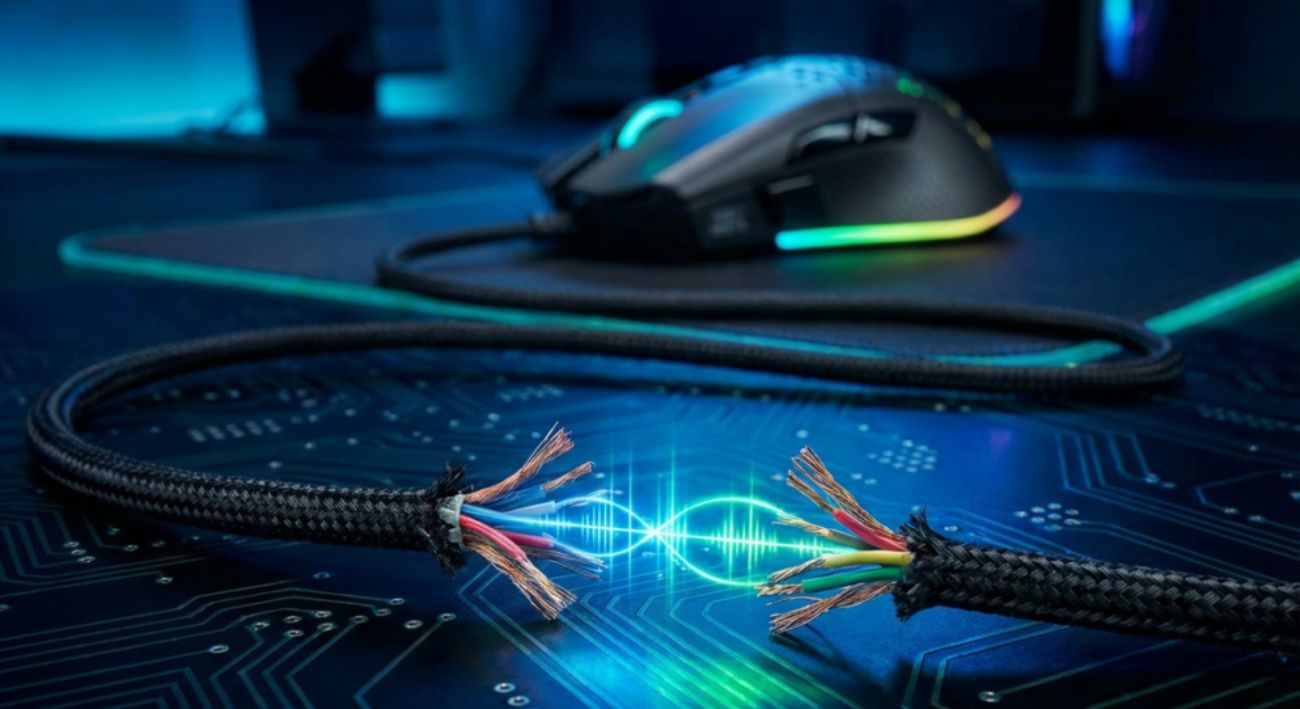

Choosing the right gaming mouse matters. The wired vs. wireless debate has lasted for years and can impact your performance. Wired mice offer reliable connections; wireless ones provide more freedom. This guide compares the two types, outlining their pros and cons to help you choose the best mouse for your gaming needs.
Wired vs Wireless Gaming Mouse: Quick Comparison Table
Choosing between a wired and wireless mouse depends on your gaming priorities.
Wired mice offer stable, lag-free connections, while wireless options provide greater freedom of movement.
To help you decide, we’ll compare their features, like latency, battery life, and typical users, so you can quickly see the differences and pick the best mouse for your setup.
Side-by-Side Feature Overview
Wired and wireless gaming mice differ mainly in connection: wired use USB cables; wireless connect via receiver or Bluetooth.
Wired mice provide stable, low latency and don’t require charging. Wireless mice need batteries, but they do not match wired performance. The choice is between stability and convenience.
Quick comparison:
| Feature | Wired Gaming Mouse | Wireless Gaming Mouse |
| Connection | USB cable | USB receiver or Bluetooth |
| Power Source | Computer-powered | Rechargeable/replaceable batteries |
| Latency | Near-zero, very stable | Very low, matches wired models |
| Mobility | Limited by cable | Full freedom |
| Desk Setup | Cable management needed | Clean, cable-free |
Pros and Cons at a Glance
For gaming, should you pick a wired or wireless mouse? Here’s a quick breakdown:
A wired mouse delivers instant response and never needs charging, but the cable can restrict movement and clutter your desk.
A wireless mouse offers freedom and a tidy setup. Modern models have minimal lag but need recharging, and you must keep track of the USB receiver.
Wired Pros: No charging, zero lag, budget-friendly
Wired Cons: Cable drag, restricted movement, desk mess
Wireless Pros: Unrestricted motion, clean look, portable
Wireless Cons: Needs charging, possible interference, usually more expensive
Who Typically Chooses Each Type?
When choosing between a wired and wireless gaming mouse, consider your gaming style.
Wired mice offer fast response times and reliable connections, making them ideal for competitive gamers and budget-conscious users who prefer not to charge devices.
Wireless mice suit those who want a clutter-free desk, travel often, or value convenience, especially casual players.
Key Differences Between Wired and Wireless Gaming Mice
Choosing between a wired and wireless mouse depends on a few key factors. Wired mice offer a direct, simple connection, while wireless mice provide cord-free freedom.
This affects latency and how each device is powered.
Knowing these differences is essential for gaming. Let’s examine their connections, latency, and power needs to help you pick the best mouse for your play style.
How They Connect to Your Computer
The key difference is how these mice connect to your PC. Wired gaming mice plug into a USB port for a stable, interference-free connection. Wireless mice use a USB receiver (2.4 GHz) or Bluetooth, offering more flexibility but sometimes causing a slight lag.
Choose wired for stability or wireless for a cleaner setup without cable clutter. Both are easy to set up.
Latency and Response Time Explained
Latency, or input lag, is the brief delay between moving your mouse and seeing the result on screen. For gamers, low latency is crucial; a high response time can mean losing a match. This fuels the wired vs. wireless debate.
Wired mice have long been favoured for their near-instant 1ms response times and zero risk of interference, making them a top choice for pros.
However, modern high-end wireless mice now match wired performance. They use advanced protocols to ensure instant responses, making any difference in gaming performance nearly unnoticeable for most players.
Power and Battery Life Needs
A significant drawback of wireless mice is battery management. They rely on batteries, so you must monitor battery life to avoid interruptions, especially during gaming. Most modern models use rechargeable batteries, and many offer fast charging or allow wired use while charging, which helps.
However, it’s still something extra to remember. Wired mice don’t have this issue; they draw power directly from your computer via USB, providing uninterrupted use. This makes them ideal for marathon gaming sessions.
Performance for Gaming: Wired vs Wireless
In gaming, every millisecond matters. The wired vs. wireless mouse debate focuses on speed and reliability. Wired mice offer minimal latency, favoured by serious gamers.
However, modern wireless mice now match wired performance, making the choice a matter of preference. We’ll compare lag, stability, and customisation to help you find the right mouse for your gaming needs.
Lag, Speed, and Responsiveness
Lag can ruin gaming by delaying your on-screen actions. Traditionally, wired mice were preferred for their instant responsiveness and minimal lag.
Now, high-quality wireless gaming mice offer response times nearly as fast as wired ones. Advanced wireless technology has made lag almost undetectable for most gamers.
Choosing between wired and wireless is more about preference, stable connection versus cable, freedom, than speed. Both deliver the responsiveness you need to compete.
Wired Gaming Mouse: What Sets It Apart
A wired gaming mouse is valued for its reliability and simplicity. Its USB connection delivers a stable, lag-free signal with no batteries or charging required, making it a top choice in esports. Just plug it in and play.
However, the cable can cause drag and get snagged on your desk or other objects, requiring careful cable management. Still, many gamers prefer wired mice for their consistent performance.
Always-On, No Recharging Needed
A wired mouse is always powered, drawing energy directly from your computer, no charging or battery replacements needed. This reliability is ideal for gamers, ensuring uninterrupted play and peace of mind during long sessions. Its plug-and-play design means your mouse is always ready, making it the perfect choice for a dependable, hassle-free gaming experience.
Consistent Performance for Esports
Professional gamers have long preferred wired mice for gaming due to their reliability. Wired mice offer minimal latency and eliminate the risk of signal drops or wireless interference, which is crucial in high-stakes tournaments. While some pros are now switching to wireless options, wired mice remain popular for their consistent, lag-free performance.
Cable Issues and Desk Space
The main drawback of a wired mouse is the restrictive USB cable, which can cause cable drag and interfere with smooth movement—especially in fast-paced gaming.
Managing the cable, such as using a mouse bungee, adds extra hassle and desk clutter, which may disrupt a minimalist setup. Despite ergonomic designs, the cable limits your range of motion and can tangle with other devices. For many gamers, these inconveniences make wireless mice more appealing.
Wireless Gaming Mouse: Strengths and Weak Points
A wireless gaming mouse offers one key advantage: complete freedom. Without a cable, you get a clean desk and unrestricted movement, making gaming feel more natural and immersive. However, this comes with a trade-off: battery life. You need to keep it charged or risk it dying mid-game. While modern wireless mice offer long battery life and fast charging, it’s still a concern for wired-mouse users.
Freedom of Movement and Portability
The main advantage of a wireless gaming mouse is unrestricted movement; no cables means smoother, more fluid gameplay. It also keeps your setup clean and organised by eliminating cable clutter, giving it a sleek look. Plus, its portability makes it easy to pack and set up, perfect for gaming on the go.
Advances in Wireless Speed and Tech
Wireless mouse technology has dramatically improved for gaming. Modern models use advanced sensors and dedicated 2.4GHz connections for ultra-low 1-millisecond latency, matching wired performance for most gamers.
Now, you can enjoy both convenience and top-tier performance. Today’s wireless gaming mice are reliable and fully suited for competitive play.
Dealing with Charging and Batteries
A drawback of wireless mice is the need for battery management, unlike wired mice.
Most wireless gaming mice use rechargeable batteries that last 30 to 100+ hours per charge, depending on features like RGB lighting. When low, you can recharge via USB, often while still using the mouse. Some models use replaceable batteries, which adds cost but allows quick swaps if you have spares. Ultimately, battery management is the trade-off for wireless convenience, minor for some, but a deal-breaker for others.
Reliability: Wired vs Wireless for Consistent Play
In gaming, reliability is crucial. A wired mouse delivers a stable, consistent connection, ideal for long sessions. However, modern wireless mice are now highly dependable, with minimal signal issues. Let’s compare how both options provide a smooth, reliable experience.
Interference and Signal Drop Concerns
Are wireless gaming mice as reliable as wired ones? Interference is the primary concern, since wireless mice use radio signals that other devices can disrupt. For most users, this isn’t an issue. Modern wireless mice use robust 2.4GHz connections that are resistant to interference and automatically switch channels.
Connectivity problems are rare at home.
In crowded settings with heavy wireless traffic, such as tournaments, interference risk increases. That’s why some pro gamers prefer wired mice for guaranteed stability.
Wireless mice are dependable, but wired ones offer unmatched consistency.
Dependability During Long Sessions
Dependability is key during long gaming sessions. A wired mouse excels with its stable connection, plug it in and play without worrying about performance drops or power loss.
Wireless mice, while convenient, require attention to battery life. Even though many last for days, forgetting to charge can interrupt your game. Some models let you use them wired while charging, adding reliability. Still, for uninterrupted marathon sessions, a wired mouse remains the most dependable choice.
Real-World Gamers’ Experiences
The choice between wired and wireless mice is essentially a matter of personal preference. Traditionally, gamers preferred wired mice for reliable performance and instant response, avoiding battery issues.
However, modern wireless mice are just as responsive, and many gamers appreciate the cable-free setup and cleaner desk. Both types have their fans; choose wireless for convenience and tidiness, or wired for dependable reliability.
Professional and Competitive Gamers: What Do They Use?
When you look at what professional gamers use, you get a good idea of what works best under pressure. For years, wired mice were the standard in esports. The reliable, lag-free connection was essential for competitive gamers. But as wireless technology has improved, that trend is starting to change.
Many pros are now making the switch to wireless models, trusting them in high-stakes tournaments. We’ll look at the current choices of pro gamers, how game genres influence their decision, and whether tournament rules play a role.
Pro Gamer Choices and Trends
Pro gamers’ preferences often reflect a mouse’s actual performance. For years, wired mice dominated the professional gaming scene for their speed and reliability. That’s changed.
Now, many pros use wireless mice in top tournaments thanks to significant advances in wireless technology. High-end wireless models deliver performance nearly identical to wired ones, earning pro gamers’ trust through extensive testing.
While some stick with wired out of habit, the trend is shifting toward wireless. With equal speed and greater freedom of movement, more pros are making the switch.
Game Genres That Influence Mouse Choice
The type of game you play greatly influences your mouse choice. Fast-paced FPS games demand low-latency, wired mice for quick reactions and precise aiming. In contrast, MMOs and strategy games often prioritise wireless convenience and extra programmable buttons over minimal latency.
Ultimately, your needs should guide your decision. Competitive FPS players may prefer fast, wired mice, while casual or slower-paced gamers might benefit more from the flexibility of a wireless mouse.
Tournament Rules and Mouse Preferences
Tournament rules can influence mouse choices, especially at live events. In large arenas with thousands of fans and wireless devices, signal interference is a bigger risk than at home. To prevent issues, tournaments once required wired mice for stable, uninterrupted connections—crucial during high-stakes moments.
Now, with more reliable wireless technology, many tournaments have relaxed these rules. High-end wireless mice are trusted even in crowded venues. Still, some pros stick to wired mice for extra security and peace of mind.
Deciding Which Mouse Is Right for You
Choosing the right mouse depends on your gaming needs and preferences; there’s no one-size-fits-all answer. What suits a pro gamer may not work for a casual player.
Decide what matters most: flawless performance or wireless freedom.
Consider your gaming style, where you play, and your budget. By comparing wired and wireless options based on your habits, you’ll find the mouse that feels comfortable and helps you perform at your best.
Matching a Mouse to Your Gaming Style
Your gaming style is key when choosing a mouse. If you’re a competitive gamer who plays fast-paced shooters, you’ll want the low latency and reliability of a wired mouse; every millisecond counts. For casual gamers who enjoy various genres, a wireless mouse offers convenience and a clutter-free setup, with minor performance differences that won’t impact gameplay.
Consider your approach: are you aiming for the top or just playing for fun? Choose a mouse that matches your intensity so you get the features you need without paying for extras you won’t use.
Thinking About Home, Travel, or eSports
Where you play affects your mouse choice. For a home setup, both wired and wireless mice work—wireless for a clean, minimalist desk, wired for plug-and-play convenience without battery worries.
If you travel or attend LAN parties, wireless mice are easier to pack and set up, with no cables to manage.
For esports, reliability matters most. While many pros use wireless now, a wired mouse remains the safest in tournaments with potential interference. Consider your central gaming location to decide which suits you best.
Factors to Consider for UAE Gamers
For UAE gamers, a strong community and high-quality setups are standard. When choosing a mouse, consider your environment; apartment living can mean crowded wireless networks and possible interference. Competitive online gaming is popular, so low-latency, high-precision mice are essential; both premium wired and wireless options work well. Also, pick brands with good local availability and support to ensure easy purchases and assistance. Choose a mouse that suits both your gaming style and regional needs.
Conclusion
Choosing a wired or wireless gaming mouse depends on your preferences and gaming style. Wired mice offer reliable, consistent performance for competitive play, while wireless mice provide freedom and convenience. Consider latency, battery life, and comfort. The best mouse is the one that feels right and fits your needs. Ready to find yours? Start today!
Frequently Asked Questions
Can wireless gaming mice handle competitive gaming today?
Yes, absolutely.
Modern wireless gaming mice have advanced technology that delivers low latency and fast response times, making them perform just as well as wired models.Many professional players now use wireless mice in competitive gaming tournaments, proving their reliability and top-tier gaming performance.
Are wired gaming mice consistently faster than wireless?
Not anymore. While wired mice historically had faster response times, modern wireless gaming mice have virtually eliminated that gap. High-end wireless models now have latency so low that the difference is unnoticeable to human perception, making them equally fast for gaming.
What should I think about before picking my gaming mouse?
Before picking, consider your primary gaming needs and personal preferences.
Think about the types of games you play, the importance of an ergonomic design for comfort, and your budget.
Also, consider your gaming setup and whether you prefer the reliability of a wired connection or the freedom of wireless.